


You are about to swap a token on a familiar decentralized exchange. The site looks right, the network is selected, and the quoted amount seems reasonable. Then your wallet asks you to approve a transaction containing technical data that most people cannot read at a glance. A second prompt may request permission for a contract to spend your tokens. Nothing appears obviously dangerous, yet the important question is not simply, “Can I sign this?” It is, “What will signing make possible, and what can happen next?”
That distinction is the foundation of practical wallet security. A wallet does not decide whether a DeFi action is economically sensible, and a transaction simulator cannot eliminate smart-contract risk. But a security-oriented wallet can make the proposed state change more visible before it reaches the blockchain. For users in the United States managing assets across Ethereum and other EVM networks, that extra context can turn a blind signature into an informed decision.
The security problem is not the signature alone
On an EVM-compatible blockchain, a transaction is a set of instructions sent to a smart contract. The wallet may display a contract address, a function name, a gas estimate, and encoded data. That information is technically accurate, but accuracy is not the same as usability. A user can be shown the raw bytes of a transaction and still have no practical way to understand whether it swaps one asset, transfers several assets, grants a spending allowance, or interacts with a malicious contract.
Transaction simulation addresses this gap by attempting to execute the proposed transaction in a controlled environment before the user signs it. The simulation can reveal an expected outcome such as the assets leaving the wallet, the assets expected in return, a failed call, or a token approval being created. Mechanically, it is a preview of a possible state transition: if the transaction were executed against a particular view of the blockchain, what balances and permissions would change?
This is more useful than a simple “success” or “failure” label. A transaction can succeed technically while producing a poor or dangerous result. For example, a contract call might complete while transferring an unexpected token, setting a broad allowance, or routing funds through a path the user did not intend. Simulation helps expose the action’s economic shape, not merely its technical validity.
There is an important boundary, however. A simulation is conditional on the information available when it runs. Blockchain state can change between simulation and execution; prices can move; a contract can behave differently depending on timing, caller, block conditions, or external data. A simulator also cannot prove that a smart contract is well designed or that its administrators will not change its behavior later. It is a powerful warning system, not a formal safety certificate.
Token approvals are permissions, not payments
One of the most persistent DeFi misunderstandings concerns token approvals. When a user swaps an ERC-20 token, the decentralized exchange often needs permission to move that token from the user’s address. The approval transaction does not necessarily transfer the tokens immediately. Instead, it creates an allowance: a limit describing how much a designated spender contract may transfer later through the token’s rules.
That difference matters because an approval can outlive the transaction that prompted it. If the allowance is large, or effectively unlimited, the spender may be able to move the approved token balance in the future, subject to the token contract and the spender’s logic. The user may have intended a one-time trade but created a continuing permission. This is why token approval management belongs beside transaction review rather than being treated as an administrative afterthought.
A useful mental model is to separate three questions. First, what transaction am I signing now? Second, what permission does it create or consume? Third, how long should that permission remain active? The first question is about an immediate state change. The second concerns authority. The third concerns exposure over time. Wallet security improves when all three are visible before signing.
Approval management also has a trade-off. Tight, exact approvals can reduce the amount exposed if a spender is compromised, but they may require another approval transaction when the user trades again. Larger approvals can make repeated interactions smoother and may avoid extra network fees, but they leave more authority in place. There is no universal setting that is safest for every user. Someone experimenting with an unfamiliar protocol may reasonably prefer limited approvals; someone using a well-understood application frequently may prioritize convenience while still reviewing the spender and periodically cleaning up permissions.
How a wallet review changes the decision
When a wallet presents a transaction simulation, the most valuable information is often not a dramatic warning. It is the ordinary detail that confirms whether the proposed action matches the user’s intention. Before approving, look for the assets expected to leave, the assets expected to arrive, the contract or spender receiving authority, and any change in token allowances. If the result is vague, empty, or inconsistent with the interface you used, pause rather than treating the absence of a warning as approval.
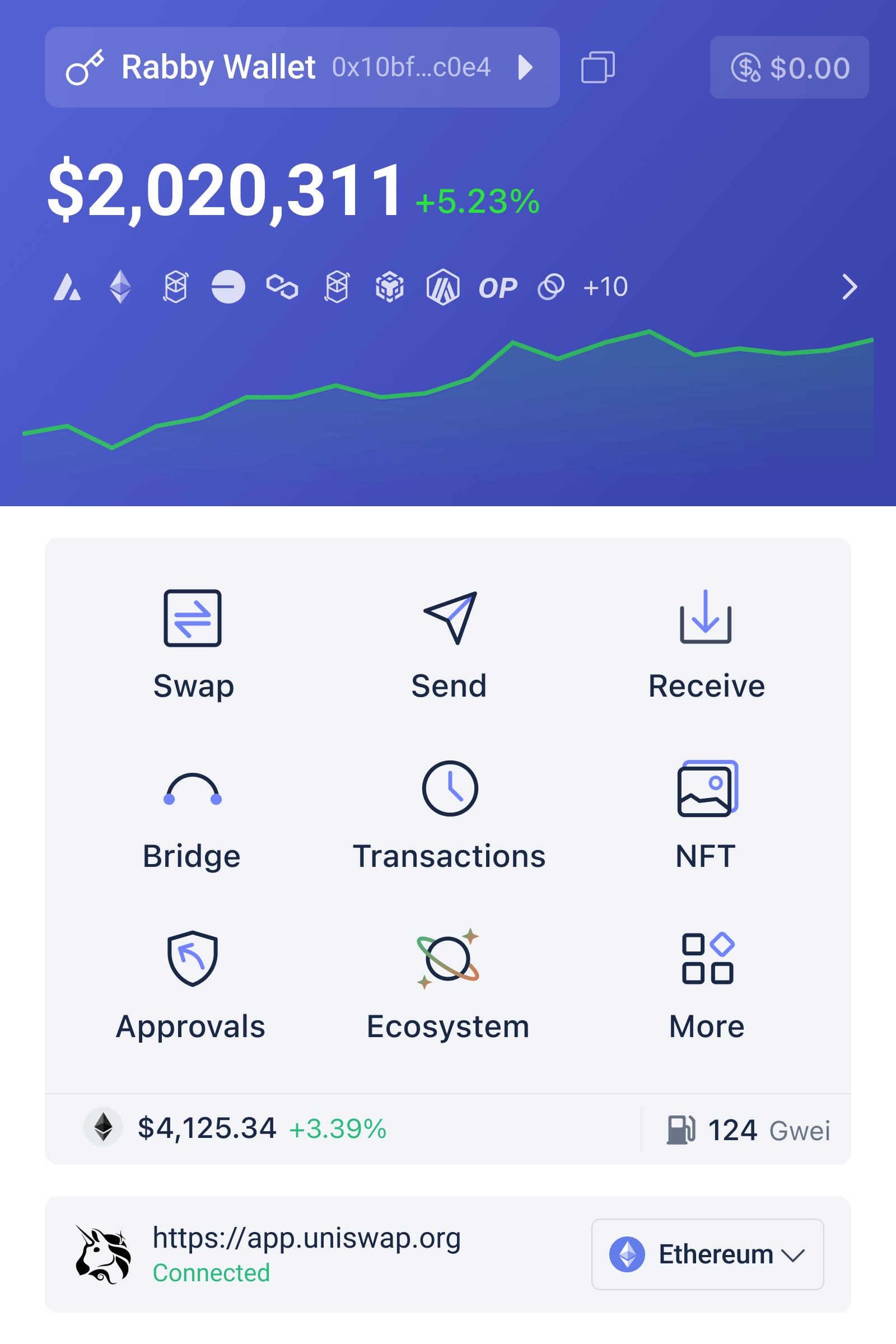
This is where installing a wallet extension should be approached as a security workflow, not merely a download. Users considering the rabby wallet should obtain the extension through a trusted, verified distribution path, check that the browser extension is the expected one, and never enter a recovery phrase into a website or support form. The extension can improve transaction visibility, but the user remains responsible for the initial installation environment and for protecting the wallet’s recovery material.
Recent project messaging has positioned Rabby as a wallet for Ethereum and EVM networks, with Chrome and Brave extension use highlighted. That broad network coverage is convenient, but it introduces a practical risk: the same address can interact with many protocols, bridges, and applications whose assumptions differ. A simulation is most valuable when users resist the temptation to treat every EVM chain as interchangeable. Verify the selected network, the application domain, the token, and the expected destination before signing.
Three security approaches, and what each gives up
Blind signing
Blind signing means approving a transaction while relying mainly on the website’s interface and a limited wallet prompt. It is fast and familiar, but it transfers much of the interpretation burden to the application. If the site is compromised, misleading, or simply poorly designed, the user may sign something materially different from what they thought they were doing. Blind signing is not automatically malicious; it is a visibility problem. Its weakness is greatest when the transaction contains complex contract calls or broad approvals.
Simulation and human-readable review
Simulation adds a pre-execution estimate of the transaction’s consequences. This approach is especially useful for comparing intent with outcome: “I intended to swap a small amount of one asset, but the proposed result requests permission over my entire balance.” It can also help identify failed transactions before paying network fees. The sacrifice is that the preview depends on simulation quality, current chain data, and the wallet’s ability to interpret unusual contract behavior. A clean preview should increase confidence, not end the investigation.
Hardware wallet confirmation
A hardware wallet keeps signing keys in a separate device, reducing the chance that malware on a computer can extract those keys. That is a major advantage for long-term holdings. Yet hardware protection does not automatically make a transaction economically safe. A user can confirm a malicious approval on a secure device. Hardware wallets protect key custody; simulation and careful review help evaluate what the key is being asked to authorize. For larger balances, combining the two can be stronger than choosing between them.
Manual approval-revocation tools offer another option. They let users inspect and reduce allowances after interacting with DeFi protocols. This can limit dormant permissions, but revocation itself is an on-chain transaction that costs gas, and removing an approval does not reverse transfers that already occurred. Nor does revocation solve every contract risk. It is maintenance, not a substitute for reviewing new permissions before they are granted.
A reusable approval checklist
Before signing a DeFi transaction, start with intent in plain language: “I am swapping this amount of this token on this network.” Then compare that sentence with the wallet’s simulation. Examine whether the receiving asset and approximate amount make sense, whether the destination contract is the one you expected, and whether the transaction creates or increases an allowance. If the wallet highlights a suspicious or unusual result, investigate the application and contract rather than dismissing the warning because the dollar amount is small.
Next, consider the time dimension. Is this approval needed for one interaction, or is it likely to remain unused for weeks? Does the amount exceed what the strategy requires? Would a separate trading wallet reduce the consequences of a mistake? Segregating funds across wallets is not a cure-all, but it can contain operational risk. A wallet used for experimental applications should not necessarily hold the same assets as a wallet reserved for savings.
Finally, remember that a transaction can be honest at the moment of signing and still become risky later. Protocol upgrades, compromised front ends, administrative keys, oracle failures, and changes in market liquidity can alter the surrounding risk. This is a boundary condition that no wallet interface can fully solve. Security is therefore layered: use a trusted browser environment, protect recovery material, review simulations, limit approvals where practical, and monitor permissions and balances over time.
What to watch as wallet security develops
If simulation becomes more common across EVM applications, the meaningful improvement will not be a prettier confirmation window by itself. The important question will be whether wallets can consistently translate complex contract behavior into an accurate explanation of assets, permissions, and uncertainty. Users should watch for clearer distinctions between a predicted outcome and a guarantee, better handling of unusual tokens, and warnings that explain why an action is risky instead of merely displaying a generic red alert.
One plausible direction is more granular permission design, where applications request narrowly scoped authority rather than broad allowances. That could reduce the damage from a compromised spender, but adoption depends on token standards, protocol engineering, user experience, and compatibility. Another possibility is greater use of separate accounts for experimentation, trading, and long-term custody. Neither development removes human judgment. They change where judgment is applied and how much damage a single mistake can cause.
Frequently asked questions
Does transaction simulation guarantee that a DeFi transaction is safe?
No. It estimates what the transaction may do under a particular blockchain state and set of assumptions. It can reveal unexpected transfers, approvals, or failures, but it cannot prove that the contract is trustworthy, that the application is authentic, or that conditions will remain unchanged until execution.
Should every token approval be revoked immediately?
Not necessarily. Revoking unused approvals can reduce the authority left with old or unfamiliar spenders, but it costs a network transaction and does not undo completed transfers. A practical approach is to review approvals periodically, reduce broad permissions when they are no longer needed, and be especially cautious with protocols you no longer use.
Is a hardware wallet enough for DeFi security?
A hardware wallet can protect the private key from many computer-based threats, but it cannot stop a user from approving a harmful contract call. Key protection and transaction interpretation solve different problems. For meaningful DeFi exposure, both deserve attention.
The central lesson is simple but easy to miss: wallet security is not only about keeping a secret key secret. It is also about understanding the authority that each signature creates. Transaction simulation provides a preview, approval management limits the duration and scope of permissions, and disciplined review connects the two. Used together, they do not make DeFi risk-free. They make the risks more visible—and visibility is where better decisions begin.
Comments are closed.